

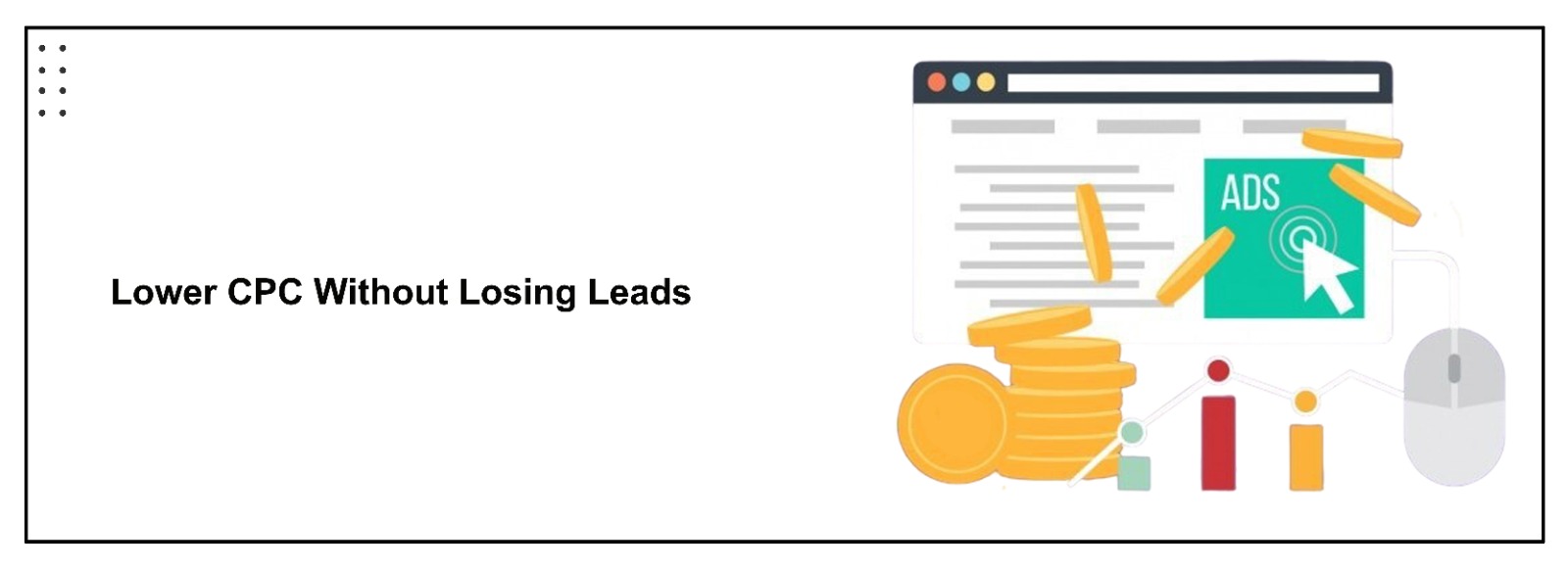
Cost-Per-Click (CPC) is the amount you pay each time someone clicks on your advertisement. When many businesses target the same keywords and audience, the cost per click naturally increases. Some businesses try to reduce CPC by lowering bids or limiting their campaigns, but this often leads to fewer clicks and reduced lead generation. Simply cutting costs without a proper strategy can negatively impact overall performance.
A better approach is to focus on improving the effectiveness of your campaigns. This includes selecting the right keywords, targeting a specific audience, and creating ads that clearly match what users are searching for. When your ads are relevant and your landing page provides a smooth and clear experience, users are more likely to take action. This helps in reducing CPC while maintaining or even increasing the quality and number of leads.
Understanding CPC in Depth
Cost-Per-Click (CPC) refers to the amount advertisers pay each time a user clicks on their advertisement. It is determined through an auction system where multiple advertisers compete for ad placements. Contrary to popular belief, CPC is not solely dependent on how much you are willing to bid. Instead, platforms like Google Ads evaluate several factors, including ad relevance, expected click-through rate, and landing page experience.
This means that even if a competitor bids higher, a well-optimized campaign can still achieve better ad placement at a lower cost. Factors such as keyword competition, ad quality, and user engagement significantly influence CPC. Therefore, improving these elements is essential for reducing costs without sacrificing performance.
The Core Principle: Efficiency Over Cheap Traffic
Lowering CPC should not be confused with simply acquiring cheaper clicks. The primary objective should be to improve efficiency across the entire campaign. Cheap clicks that do not convert into leads or customers are ultimately a waste of budget. On the other hand, slightly higher-cost clicks that generate high-quality leads can deliver better returns.
The focus should always be on maximizing the value derived from each click. This involves targeting the right audience, delivering relevant messaging, and ensuring a seamless user experience from ad click to conversion. By prioritizing efficiency over cost-cutting, businesses can achieve sustainable growth and better return on investment.
Improving Quality Score
Quality Score is a key factor that directly affects how much you pay for each click and where your ad appears. It measures how relevant and useful your ad is compared to what the user is searching for. If your ad closely matches the user’s intent, platforms like Google reward you with better ad positions at a lower CPC. On the other hand, irrelevant ads lead to a lower Quality Score, which increases costs and reduces visibility.
To improve Quality Score, it is important to ensure consistency between your keywords, ad copy, and landing page. When a user clicks on an ad and finds exactly what they were looking for, they are more likely to engage and convert. This improves click-through rate and overall user experience. A fast-loading, relevant, and easy-to-navigate landing page further strengthens this score. Over time, these improvements reduce CPC and enhance campaign performance significantly.
Keyword Strategy and Targeting
Keyword strategy is the foundation of any successful ad campaign because it determines who sees your ads and how much you pay for each click. Broad keywords may bring high traffic, but they are usually expensive and attract a mixed audience, including users who are only exploring and not ready to convert. This increases CPC and reduces efficiency. On the other hand, long-tail keywords are more specific and targeted, which means they face less competition and cost less per click. More importantly, they attract users with clear intent, increasing the chances of conversion.
For example, a user searching for “GST registration” may still be researching, while someone searching for “GST registration for small businesses in Delhi” is likely ready to take action. Understanding this intent helps businesses choose keywords that align with user needs at different stages of the buying journey. By focusing on high-intent keywords and refining targeting, businesses can reduce CPC, improve ad relevance, and generate more qualified leads.
Using Negative Keywords Effectively
Negative keywords help you stop your ads from showing on irrelevant searches, which saves budget and improves campaign quality. When ads appear for the wrong queries, users who are not interested click on them, leading to wasted spend and low conversions. By adding negative keywords, you filter out such traffic and ensure that only users with real intent see your ads. This improves targeting accuracy and prevents unnecessary costs.
For example, if you provide paid services, adding words like “free,” “jobs,” or “course” as negative keywords ensures your ads do not attract users looking for free resources or employment opportunities. Over time, regularly reviewing search terms and updating your negative keyword list helps refine your audience further. This not only improves click-through rate and ad relevance but also reduces CPC and increases the chances of generating quality leads.
Optimizing Ad Copy for Better Performance
Ad copy plays a significant role in attracting the right audience and improving campaign performance. A well-crafted ad should clearly communicate the value of your offering while addressing the user’s needs. Generic or vague ad copy often leads to lower engagement and higher CPC.
Effective ad copy includes relevant keywords, a strong value proposition, and a clear call-to-action. It should also highlight unique selling points such as speed, expertise, or affordability. Additionally, using qualifying language like “for businesses” or “for startups” can help filter out irrelevant clicks. This ensures that only users who are genuinely interested in your services engage with your ads.
Enhancing Landing Page Experience
The landing page is where users decide whether to take action or leave. Even if your ads are highly effective, a poorly designed landing page can result in lost opportunities and increased CPC. Search engines and ad platforms consider landing page experience when determining ad rankings, making it a critical factor in cost optimization.
A good landing page should load quickly, be mobile-friendly, and provide clear and relevant information. The content should align with the ad message, ensuring consistency and building trust. Simplifying forms, reducing distractions, and including strong calls-to-action can significantly improve conversion rates. When users have a positive experience, it not only increases conversions but also contributes to lower CPC.
Smart Bidding Strategies
Smart bidding strategies are automated bidding methods that use data and machine learning to optimize how much you pay for each click. Instead of manually setting bids for every keyword, these strategies allow advertising platforms to adjust bids in real time based on factors like user behavior, device, location, time of search, and likelihood of conversion. While manual bidding gives more control, it requires continuous monitoring and may not react quickly to changing conditions, which can lead to inefficiencies and higher CPC.
With strategies like “Maximize Conversions” or “Target CPA (Cost Per Acquisition)”, the platform automatically increases bids for users who are more likely to convert and reduces bids for less relevant traffic. This ensures that your budget is spent on high-intent users, improving both conversion rates and cost efficiency. Over time, smart bidding learns from campaign data and becomes more accurate, helping businesses achieve better results without constant manual intervention.
Refining Audience Targeting
Targeting the right audience is essential for reducing CPC and improving lead quality. Broad targeting can lead to irrelevant impressions and clicks, which increases costs without delivering results. By narrowing down the audience based on demographics, location, and interests, businesses can ensure that their ads reach the most relevant users.
For example, a compliance service provider should focus on business owners, entrepreneurs, and professionals rather than a general audience. Location-based targeting can further refine campaigns by focusing on specific cities or regions where demand is higher. This precision reduces wasted spend and improves overall campaign efficiency.
Improving Click-Through Rate (CTR)
Click-Through Rate (CTR) is a key performance indicator that directly impacts CPC. A higher CTR indicates that users find your ads relevant and engaging, which can lead to lower costs and better ad placements.
Improving CTR requires creating compelling ad copy that captures attention and encourages users to take action. Using emotional triggers, highlighting benefits, and incorporating urgency can significantly enhance engagement. For instance, phrases like “Get Started Today” or “Limited Time Offer” can motivate users to click. As CTR improves, ad platforms reward the campaign with lower CPC and higher visibility.
Remarketing
Remarketing is a powerful strategy that targets users who have already interacted with your brand. These users are more likely to convert because they are familiar with your services. As a result, remarketing campaigns often achieve lower CPC and higher conversion rates.
By showing tailored ads to previous website visitors or users who have engaged with your content, businesses can re-engage potential leads and guide them toward conversion. Remarketing not only improves efficiency but also maximizes the value of existing traffic.
Conversion Rate Optimization (CRO)
Conversion Rate Optimization (CRO) focuses on turning more of your existing visitors into actual leads or customers, instead of only trying to bring more traffic. Many businesses spend heavily on ads to get clicks but ignore what happens after the user lands on the page. If your landing page is not convincing or easy to use, even high-quality traffic will not convert. That’s why improving conversion rate is equally important as reducing CPC because higher conversions automatically reduce your overall cost per lead.
CRO involves understanding how users behave on your website and identifying where they drop off. For example, users may leave because the form is too long, the page is slow, or the message is unclear. By simplifying forms, using clear headings, adding trust signals like reviews, and offering easy contact options such as WhatsApp or direct calls, you make it easier for users to take action. Small improvements in user experience can lead to a significant increase in conversions, making your ad campaigns more efficient and cost-effective.
Common Mistakes to Avoid
Many businesses unknowingly increase their CPC due to common mistakes such as targeting overly broad keywords, neglecting negative keywords, or using generic ad copy. Sending traffic to poorly optimized landing pages and ignoring user intent can further reduce campaign effectiveness.
Another common issue is focusing solely on clicks rather than conversions. While clicks are important, they do not guarantee business results. Avoiding these mistakes is essential for maintaining a balance between cost and performance.
Conclusion
Lowering Cost-Per-Click without losing leads is not about reducing budgets or compromising performance; it is about improving how efficiently your campaigns operate. By focusing on ad relevance, precise audience targeting, strong keyword strategy, and a seamless user experience, businesses can ensure that every click adds real value. When campaigns are aligned with user intent and supported by optimized landing pages, the chances of conversion increase significantly, allowing advertisers to spend less while achieving better outcomes.
A well-optimized campaign does more than just reduce CPC it enhances lead quality and maximizes return on investment. Instead of chasing short-term cost reductions, businesses should aim to build a sustainable system driven by data, continuous testing, and improvement. Over time, this strategic approach leads to consistent performance, scalable growth, and stronger results in digital advertising.
Frequently Asked Questions (FAQs)
Q1. Can lowering CPC affect lead quality?
Ans. Yes, lowering CPC can affect lead quality if done incorrectly. Reducing bids or targeting cheap keywords may attract irrelevant users. However, with proper targeting, ad relevance, and optimization, businesses can lower CPC while maintaining or even improving lead quality.
Q2. What is more important-CPC or conversions?
Ans. Conversions are more important than CPC because they directly impact business results. A low CPC does not guarantee success if users do not convert. Businesses should focus on cost per lead and ROI rather than just reducing the cost of clicks.
Q3. How quickly can CPC be reduced?
Ans. CPC can usually be reduced within one to three weeks after implementing optimization strategies. Improvements in keywords, ad copy, and landing pages start showing results quickly. However, consistent monitoring and testing are required for long-term CPC reduction and performance improvement.
Q4. Are long-tail keywords always better?
Ans. Long-tail keywords are more specific, less competitive, and often generate better conversions. However, relying only on them may limit reach. A balanced strategy using both long-tail and core keywords helps attract targeted users while maintaining sufficient campaign visibility.
Q5. Does Quality Score really impact CPC?
Ans. Yes, Quality Score significantly affects CPC. A higher Quality Score improves ad relevance and user experience, allowing businesses to pay less per click while achieving better ad positions. Improving ad copy, keywords, and landing pages helps increase Quality Score effectively.
Q6. What is the ideal CPC for a campaign?
Ans. There is no fixed ideal CPC, as it varies by industry and competition. The focus should be on profitability rather than cost alone. If the campaign generates quality leads and positive ROI, even a higher CPC can be considered effective.
Q7. How do negative keywords help reduce CPC?
Ans. Negative keywords prevent ads from appearing for irrelevant searches, reducing wasted clicks. This improves click-through rate and overall ad relevance. As a result, campaigns become more efficient, leading to lower CPC and better quality leads over time.
Q8. Can landing page optimization reduce CPC?
Ans. Yes, landing page optimization improves user experience and increases conversion rates. A well-designed page enhances Quality Score, which can lower CPC. Faster loading speed, relevant content, and clear calls-to-action contribute significantly to better ad performance and reduced costs.
Q9. Why is CTR important for lowering CPC?
Ans. CTR indicates how relevant and engaging your ads are. A higher CTR signals better user interest, which advertising platforms reward with lower CPC and improved ad ranking. Optimizing ad copy and targeting helps increase CTR and reduce overall advertising costs.
Q10. Is remarketing useful for reducing CPC?
Ans. Yes, remarketing targets users who have already interacted with your brand, making them more likely to convert. These audiences typically have lower CPC and higher engagement. It helps maximize existing traffic and improves overall campaign efficiency and return on investment.