

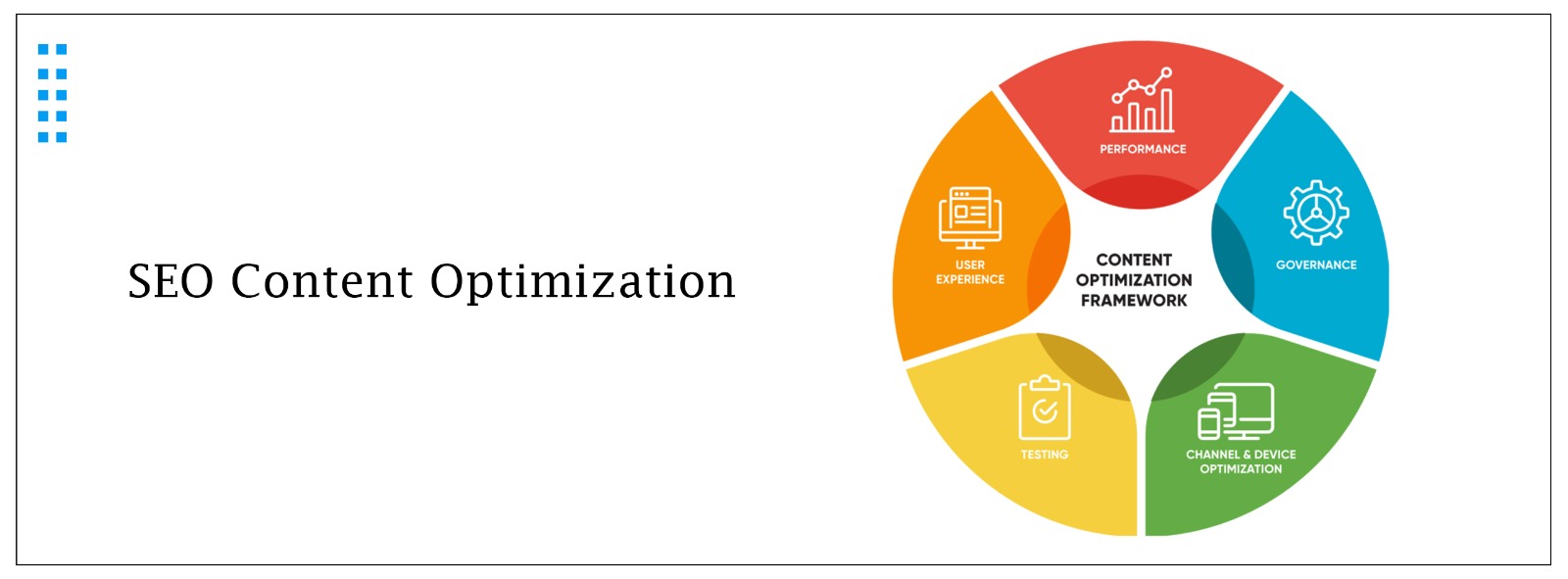
Website Content Optimization for SEO is the process of improving website content so that it becomes more understandable for both users and search engines. It includes optimizing keywords, headings, meta tags, images, internal links, and content structure to improve search engine rankings. The purpose of optimization is to ensure that webpages appear in relevant search results when users search for related topics online. Proper optimization helps search engines identify the purpose and relevance of a webpage more effectively.
SEO content optimization also focuses on improving user experience. Content should be informative, easy to read, and properly structured so visitors can quickly find the information they need. Businesses use SEO optimization to increase organic traffic, generate leads, and build online authority. In today’s digital world, optimized content plays a major role in helping websites compete successfully on search engines and attract targeted audiences without depending completely on paid advertising campaigns.
Importance of Website Content Optimization
Website content optimization is important because it helps improve the visibility of webpages on search engines. When content is properly optimized, search engines are more likely to rank it higher in search results. Higher rankings increase the chances of attracting more organic traffic, which can lead to more inquiries, sales, and business growth. Businesses with optimized websites generally perform better online compared to websites with poorly structured content.
Content optimization also improves user engagement and trust. Visitors prefer websites that provide clear, useful, and easy-to-read information. If users spend more time on a webpage, search engines consider the content valuable and relevant. Optimized content also helps businesses establish authority in their industry by providing accurate and professional information. This not only improves rankings but also enhances brand credibility and customer confidence in the long term.
Understanding Search Intent
Search intent refers to the reason behind a user’s online search. It explains what the user wants to achieve after typing a query into a search engine. Some users search to gather information, while others may be looking to buy products, compare services, or visit a particular website. Understanding search intent is very important because SEO content should match the exact expectations of users to achieve better rankings and engagement.
When content satisfies user intent properly, visitors are more likely to stay on the website and interact with the content. Search engines prioritize webpages that provide relevant answers to users’ questions. For example, if a person searches for “How to optimize website content for SEO,” they expect practical guidance and detailed explanations. If the webpage fails to deliver useful information, users may leave quickly, which can negatively affect search engine rankings and overall website performance.
Keyword Research for SEO Content
Keyword research is the process of finding the words and phrases people use while searching online. It is considered one of the most important parts of SEO because keywords help search engines understand webpage content. Proper keyword research allows businesses to target the right audience and create content based on actual user searches. It also helps identify trending topics, competition levels, and user behavior patterns.
Effective keyword research improves the chances of ranking higher on search engines. Businesses use various SEO tools to identify high-search-volume and low-competition keywords relevant to their industry. Using keywords naturally throughout the content helps improve visibility without making the content look forced or unnatural. Keyword research also helps businesses understand customer interests and create targeted content that attracts qualified visitors and improves conversion opportunities.
Short-Tail Keywords
Short-tail keywords are broad search terms that usually consist of one or two words. These keywords often have very high search volume because they are general in nature and widely searched by users. Examples of short-tail keywords include “SEO Services,” “Trademark,” and “Company Registration.” Businesses often target these keywords because they can generate significant website traffic.
However, short-tail keywords are highly competitive because many websites try to rank for them. They may also attract less targeted traffic because user intent is often unclear. For example, someone searching for “SEO” may be looking for services, information, tools, or tutorials. Although short-tail keywords are useful for visibility, businesses usually combine them with long-tail keywords to attract more qualified visitors and improve conversion rates.
Long-Tail Keywords
Long-tail keywords are more specific search phrases containing three or more words. These keywords generally have lower competition and are easier to rank for compared to short-tail keywords. Examples include “Website Content Optimization for SEO” or “Best Trademark Registration Services in India.” Long-tail keywords help businesses attract highly targeted users who already know what they are searching for.
These keywords are highly valuable because they often generate better conversion rates. Users searching with long-tail keywords usually have clear intent and are closer to taking action. Long-tail keywords also help businesses target niche audiences and improve search visibility for specific topics. Using long-tail keywords naturally within detailed content helps improve SEO performance while also increasing the quality of website traffic and user engagement.
LSI Keywords
LSI keywords, or Latent Semantic Indexing keywords, are related terms connected to the primary keyword. These keywords help search engines understand the context and meaning of webpage content more accurately. For example, if the main keyword is “SEO Optimization,” related LSI keywords may include “search engine ranking,” “organic traffic,” “keyword strategy,” and “website visibility.” Using related keywords improves content relevance naturally.
LSI keywords also help webpages rank for multiple related search terms instead of relying only on one keyword repeatedly. This improves search engine understanding and prevents keyword stuffing. Modern search engines focus more on content quality and topic relevance rather than excessive keyword repetition. Including related phrases naturally within the content improves readability, enhances SEO performance, and provides users with more comprehensive information about the topic.
Creating High-Quality SEO Content
High-quality SEO content is essential for improving search engine rankings and user engagement. Good content should provide useful, original, and informative information that solves users’ problems or answers their questions clearly. Search engines prefer content that is well-structured, accurate, and valuable because their main objective is to deliver the best possible results to users searching online.
High-quality content also improves brand authority and trust. When businesses consistently publish detailed and professional content, users begin to recognize them as reliable sources of information. Quality content encourages visitors to spend more time on the website, which positively affects SEO performance. In addition, high-quality content is more likely to be shared on social media platforms and linked by other websites, increasing overall online visibility and website credibility.
Importance of Proper Heading Structure
Proper heading structure helps organize webpage content into clear sections and improves readability for users. Headings allow visitors to quickly scan the content and find relevant information without reading the entire webpage. Search engines also use headings to understand the main topics and structure of content, which helps improve indexing and ranking performance.
Using H1, H2, H3, and H4 headings correctly creates a logical content hierarchy. The H1 tag is usually used for the main title, while H2 and H3 tags organize subtopics and detailed sections. Proper heading structure improves user experience and keeps content visually organized. It also increases the chances of appearing in featured snippets because search engines can identify important information more effectively.
Optimizing Meta Title and Meta Description
Meta titles and meta descriptions are important SEO elements displayed in search engine results pages. The meta title acts as the clickable headline users see before visiting a webpage. It should clearly describe the webpage content while including relevant keywords naturally. A strong meta title improves click-through rates and helps attract more visitors from search results.
Meta descriptions provide a short summary of the webpage content. Although they may not directly affect rankings, they influence user decisions regarding whether to click on a webpage or not. A well-written meta description should be informative, engaging, and keyword-rich without appearing spammy. Proper optimization of meta tags improves website visibility, user engagement, and the overall effectiveness of SEO strategies.
Conclusion
Website Content Optimization for SEO is one of the most important aspects of digital marketing because it directly affects search visibility, organic traffic, user engagement, and business growth. Properly optimized content helps search engines understand webpage relevance while also providing valuable information to users. A successful SEO content strategy includes keyword research, high-quality writing, technical SEO improvements, mobile optimization, metadata optimization, image optimization, and continuous content updates.
Businesses that focus on user intent, content quality, and search engine best practices are more likely to achieve long-term digital success. As search engine algorithms continue evolving, businesses must prioritize user-focused, informative, and trustworthy content to remain competitive in the online marketplace.
Frequently Asked Questions (FAQs)
Q1. What is Website Content Optimization for SEO?
Ans. Website Content Optimization for SEO is the process of improving website content so that it ranks better on search engines and provides a better user experience. It involves keyword optimization, proper headings, metadata, internal linking, image optimization, and quality content creation to increase website visibility, organic traffic, and user engagement.
Q2. Why is content optimization important for SEO?
Ans. Content optimization is important because search engines prioritize websites that provide valuable, relevant, and user-friendly information. Proper optimization helps improve search rankings, attract organic traffic, reduce bounce rates, and increase conversions. It also helps search engines understand webpage relevance and improves overall website authority in competitive industries.
Q3. What is the role of keywords in content optimization?
Ans. Keywords help search engines identify the topic and relevance of webpage content. They are the search terms users type into search engines when looking for information, products, or services. Proper keyword placement improves visibility on search engine results pages and helps attract targeted organic traffic to the website.
Q4. What is keyword stuffing in SEO?
Ans. Keyword stuffing refers to the excessive and unnatural use of keywords within webpage content to manipulate search rankings. Search engines consider keyword stuffing a poor SEO practice because it negatively affects readability and user experience. Modern SEO focuses on natural keyword integration and valuable content rather than excessive keyword repetition.
Q5. What is search intent in SEO?
Ans. Search intent refers to the purpose behind a user’s search query. It helps businesses understand what users want to achieve when searching online. Search intent may be informational, transactional, navigational, or commercial. Optimizing content according to user intent improves search rankings and increases user satisfaction on the website.
Q6. How does high-quality content improve SEO?
Ans. High-quality content improves SEO because search engines prioritize content that is informative, accurate, relevant, and user-friendly. Valuable content increases user engagement, improves session duration, reduces bounce rates, and builds website authority. It also encourages backlinks and social sharing, which positively affect search engine rankings over time.
Q7. What are heading tags in SEO?
Ans. Heading tags are HTML elements used to structure webpage content. H1 represents the main page title, while H2, H3, and H4 organize subtopics and supporting sections. Proper heading structure improves readability, user navigation, and search engine understanding of content hierarchy, which helps improve SEO performance and rankings.
Q8. Why is a meta title important in SEO?
Ans. A meta title is important because it appears on search engine result pages and influences user clicks. An optimized meta title should include the primary keyword, clearly describe the webpage topic, and remain concise and attractive. Strong meta titles improve click-through rates and increase search visibility for websites.
Q9. What is a meta description in SEO?
Ans. A meta description is a short summary of webpage content displayed on search engine result pages. It helps users understand the purpose of the page before clicking. An optimized meta description should include keywords, explain page value, and encourage user interaction to improve traffic and engagement.
Q10. What is internal linking in SEO?
Ans. Internal linking refers to connecting one webpage to another page within the same website. Internal links help users navigate related content and assist search engines in crawling website pages efficiently. Proper internal linking improves user experience, distributes page authority, increases session duration, and strengthens overall website SEO performance.