


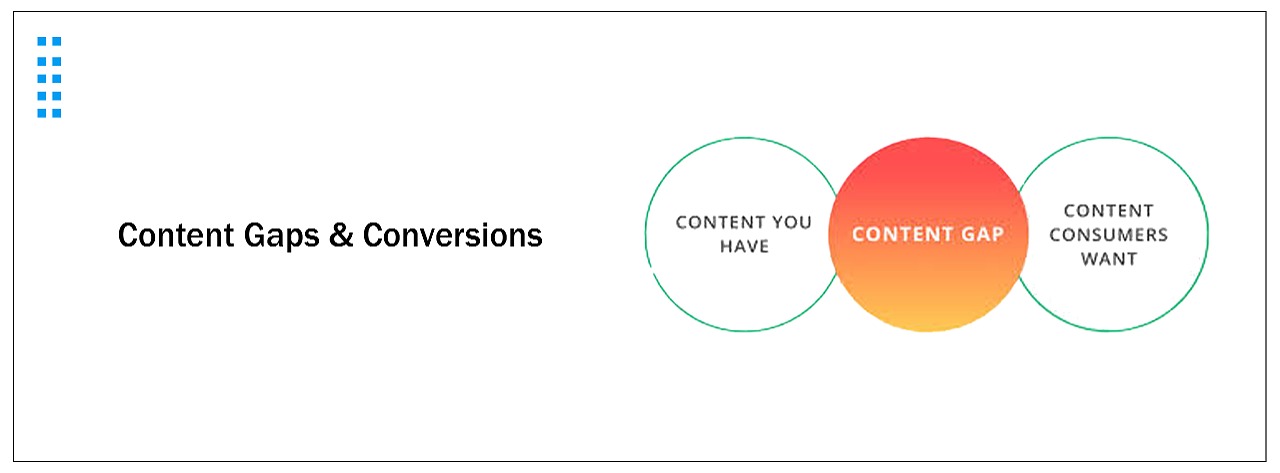
Many businesses invest heavily in website development, SEO, paid advertisements, and social media campaigns to attract visitors online. However, generating traffic alone does not guarantee leads or sales. A website may receive thousands of visitors every month but still struggle with low inquiries, poor engagement, and weak conversion rates. One of the biggest reasons behind this problem is the presence of content gaps. These gaps occur when important information is missing, unclear, outdated, poorly optimized, or not aligned with customer expectations and buying intent.
Content gaps can appear across service pages, blogs, landing pages, product descriptions, FAQs, email campaigns, and call-to-action sections. Customers often require detailed and trust-focused information before making a decision, especially when purchasing services or high-value products online. If the content fails to answer user questions, explain benefits clearly, address pain points, or guide visitors toward action, potential customers may leave the website without converting. Identifying and fixing content gaps is therefore essential for improving user experience, building credibility, increasing lead generation, and achieving better business conversions.
Lack of Clear Value Proposition
One of the biggest content gaps that reduces conversions is the absence of a clear value proposition. Many businesses explain what they offer but fail to explain why customers should choose them over competitors. Visitors usually decide within a few seconds whether a website or service is relevant to their needs. If the messaging is unclear, generic, or confusing, potential customers may lose interest immediately.
A strong value proposition should clearly explain the problem being solved, the benefits offered, and the unique advantage of the business. Many websites use broad statements that fail to address customer pain points directly. For example, a legal consultancy simply stating “We provide business registration services” is less effective than explaining how the service simplifies compliance, saves time, and reduces legal risk. Without a compelling value proposition, users often fail to understand the actual benefit of taking action.
Missing Customer Pain Point Content
Customers usually search for solutions to specific problems, not just products or services. A major content gap occurs when businesses fail to address customer pain points directly in their content. Visitors want to know whether the business understands their challenges and can provide practical solutions. If content only promotes services without discussing user concerns, conversion opportunities decrease significantly.
Pain point-focused content helps build emotional connection and trust with potential customers. For example, a business offering GST registration services should explain problems such as penalty risks, delayed compliance, document confusion, and filing errors. When customers feel understood, they are more likely to trust the business. Ignoring customer concerns often creates disconnect between marketing content and customer expectations, resulting in lower engagement and poor conversion rates.
Weak Call-to-Action (CTA) Strategy
A weak or unclear Call-to-Action is another major reason behind low conversions. Many websites provide useful information but fail to guide users toward the next step. Visitors may read the content and leave because they are not encouraged to take action. Effective CTAs help users understand what they should do next, whether it is booking a consultation, downloading a guide, requesting a demo, or making a purchase.
Poor CTA placement, vague wording, or lack of urgency can significantly reduce conversion rates. Statements such as “Click Here” or “Learn More” are often less effective than action-oriented CTAs like “Get Your Free Compliance Consultation Today” or “Start Your Registration Process.” Businesses must strategically place CTAs throughout blogs, landing pages, and service pages to maintain user engagement and encourage conversion-focused behavior.
Insufficient Trust-Building Content
Trust is one of the most important factors influencing customer decisions. A major content gap occurs when websites fail to provide credibility indicators such as testimonials, reviews, certifications, client success stories, industry recognition, or case studies. Modern consumers are highly cautious, especially when purchasing professional services or financial products online. If trust-building content is missing, users may hesitate to proceed further.
Trust-building content reassures visitors that the business is experienced, reliable, and capable of delivering results. Testimonials, client feedback, awards, legal certifications, and portfolio examples help reduce customer doubts. Businesses that fail to establish authority often struggle with conversion even if their traffic levels are high. Strong credibility-focused content increases customer confidence and positively influences purchasing decisions.
Lack of SEO-Driven Informational Content
Many businesses focus only on promotional content and ignore educational or informational content. This creates a major content gap because customers usually conduct research before making a purchasing decision. Informational content such as blogs, guides, FAQs, comparison articles, and industry updates helps attract organic traffic and nurture potential customers.
SEO-driven content improves visibility on search engines and positions the business as an authority in its field. For example, a company offering trademark registration services should create content around trademark objections, trademark classes, legal procedures, and registration timelines. Educational content not only drives traffic but also helps users understand the value of the service. Without informational content, businesses lose opportunities to engage customers during the research stage of the buyer journey.
Poorly Structured Service Pages
Service pages are one of the most important conversion-focused assets on a website. However, many businesses create service pages that are poorly organized, too technical, or lacking important details. A content gap occurs when users cannot quickly find pricing information, service benefits, process explanations, timelines, eligibility criteria, or required documents.
Well-structured service pages should provide complete and easy-to-understand information in a logical format. Visitors should immediately understand the purpose of the service, how it works, why it matters, and how to proceed. Long blocks of text without headings, visuals, FAQs, or CTAs often reduce readability and increase bounce rates. Structured content improves user experience and increases conversion probability.
Missing FAQ Sections
Frequently Asked Questions (FAQs) play a major role in removing customer doubts and improving conversions. Many businesses underestimate the importance of FAQs and fail to address common customer concerns directly. This creates uncertainty and forces users to leave the website in search of answers elsewhere.
A strong FAQ section helps explain pricing concerns, timelines, legal requirements, refund policies, service scope, documentation needs, and process clarity. FAQs also improve SEO performance because they target conversational search queries. Businesses that provide detailed FAQs create a smoother decision-making process and reduce customer hesitation. Missing FAQs often result in lost conversions because users may not feel fully informed before taking action.
Generic Content Without Personalization
Modern customers expect personalized experiences based on their needs, location, industry, or business stage. Generic content that speaks to everyone often fails to connect with anyone effectively. Businesses that do not personalize their messaging create content gaps that reduce customer engagement and conversions.
Personalized content may include location-based service pages, industry-specific examples, targeted email campaigns, or customer-segment-focused blogs. For example, startup founders, small businesses, and multinational companies all have different compliance concerns. Content that addresses their unique challenges creates stronger engagement. Personalized messaging improves customer relevance and helps businesses communicate more effectively with their target audience.
Lack of Visual and Interactive Content
Text-heavy websites often struggle to maintain user attention. A significant content gap occurs when businesses fail to use visual or interactive elements that improve engagement and simplify information delivery. Modern users prefer infographics, videos, charts, calculators, comparison tables, and visual process explanations because they are easier to understand.
Visual content improves readability, reduces bounce rates, and increases time spent on the website. Interactive tools such as eligibility checkers, pricing calculators, or ROI estimators can significantly improve conversion rates by helping users make informed decisions. Businesses that rely only on plain text may fail to capture user attention effectively in a highly competitive digital environment.
Outdated or Inaccurate Content
Outdated content is one of the most damaging content gaps affecting conversions. Customers rely on websites for accurate and updated information. If content contains outdated regulations, expired offers, old statistics, or irrelevant references, users may question the credibility of the business.
Regular content audits are necessary to ensure information accuracy and relevance. Industries such as finance, law, taxation, healthcare, and compliance require constant updates due to changing regulations and policies. Businesses that maintain updated content build stronger authority and trust. Inaccurate content can lead to customer confusion, negative experiences, and reduced conversion opportunities.
Ignoring Mobile User Experience
A large percentage of website traffic now comes from mobile devices. However, many businesses still create content primarily optimized for desktop users. Poor mobile formatting, slow-loading pages, unresponsive layouts, and difficult navigation create major content gaps that reduce conversions.
Mobile-friendly content should use shorter paragraphs, readable fonts, fast-loading visuals, and properly optimized CTAs. Users expect quick access to information without unnecessary complexity. A poor mobile experience often increases bounce rates and reduces engagement. Mobile optimization is therefore essential for maintaining conversion efficiency in modern digital marketing strategies.
Weak Lead Nurturing Content
Many businesses focus only on lead generation but fail to nurture leads through educational and relationship-building content. Not all users convert immediately after visiting a website. Some customers require multiple interactions before making a decision. Weak lead nurturing creates a major conversion gap.
Lead nurturing content may include email sequences, newsletters, industry insights, webinars, downloadable resources, and remarketing content. This helps businesses stay connected with potential customers and gradually build trust. Businesses that ignore lead nurturing often lose high-intent prospects who may convert later through consistent engagement and valuable communication.
Absence of Case Studies and Success Stories
Customers want proof before making a purchasing decision. One major content gap occurs when businesses fail to provide case studies, client success stories, or practical examples of results achieved. Visitors are more likely to trust businesses that demonstrate real-world outcomes rather than making broad claims.
Case studies help explain how specific problems were solved, what strategies were used, and what results were achieved. This creates stronger credibility and reduces customer hesitation. Success stories also provide social proof, which strongly influences decision-making behavior. Businesses without case-study content often struggle to differentiate themselves from competitors.
Poor Content Alignment With Buyer Journey
Customers move through different stages before making a purchase decision, including awareness, consideration, and decision stages. A major content gap occurs when businesses fail to create content suitable for each stage of the buyer journey.
Awareness-stage content focuses on education and problem identification, while consideration-stage content compares solutions and alternatives. Decision-stage content should include pricing clarity, testimonials, consultations, and conversion-focused messaging. Businesses that only create top-level informational content often fail to convert users because they do not support the full customer decision-making process.
Conclusion
Content gaps are one of the most overlooked reasons behind low website conversions and weak digital marketing performance. Businesses often invest heavily in SEO, advertising, and website design while ignoring whether their content truly supports customer decision-making. Missing information, weak messaging, poor trust signals, lack of personalization, outdated content, and ineffective CTAs can significantly reduce customer engagement and conversion rates.
A successful content strategy should focus not only on attracting traffic but also on guiding users toward meaningful action. Businesses must continuously audit their content, identify customer concerns, improve informational depth, strengthen trust-building elements, and optimize user experience across all digital channels. In today’s competitive online environment, high-quality and conversion-focused content is no longer optional. It has become one of the most important drivers of business growth, customer trust, and long-term digital success.
Frequently Asked Questions (FAQs)
Q1. What are content gaps in digital marketing?
Ans. Content gaps refer to missing, weak, outdated, or insufficient information on a website or digital platform that prevents users from taking the desired action. These gaps may exist in blogs, service pages, FAQs, landing pages, product descriptions, or call-to-action sections. Content gaps often reduce user trust, create confusion, and negatively affect conversion rates.
Q2. How do content gaps affect website conversions?
Ans. Content gaps reduce conversions by failing to answer customer questions, explain service benefits, build trust, or guide users toward action. When visitors do not find the information they need, they often leave the website without making a purchase, inquiry, or registration. Poorly structured or incomplete content increases bounce rates and weakens customer engagement.
Q3. What is the most common content gap on business websites?
Ans. One of the most common content gaps is the absence of a clear value proposition. Many businesses explain what they offer but fail to explain why customers should choose them. Other common gaps include weak CTAs, missing FAQs, lack of testimonials, outdated content, and poor service page structure.
Q4. Why are FAQs important for conversions?
Ans. FAQs help remove customer doubts and provide quick answers to common concerns related to pricing, timelines, eligibility, processes, or service scope. A strong FAQ section improves user confidence, reduces hesitation, and supports faster decision-making. FAQs also improve SEO visibility by targeting user search queries.
Q5. How does outdated content reduce conversions?
Ans. Outdated content creates trust issues because customers may feel the information is inaccurate or unreliable. Expired offers, old statistics, outdated regulations, or incorrect service details can confuse users and negatively impact business credibility. Regular content updates are essential for maintaining customer trust and improving conversions.
Q6. What role does SEO content play in improving conversions?
Ans. SEO content helps attract targeted users who are actively searching for information related to products or services. Informational blogs, guides, comparison pages, and educational articles help businesses engage users during the research stage of the buyer journey. High-quality SEO content improves visibility, authority, and lead generation opportunities.
Q7. How can businesses identify content gaps?
Ans. Businesses can identify content gaps through website audits, customer feedback, keyword analysis, competitor research, heatmap tools, bounce rate analysis, and conversion tracking. Reviewing user behavior helps identify missing information, weak-performing pages, and customer concerns that are not being addressed properly.
Q8. Why is personalized content important for conversions?
Ans. Personalized content improves customer engagement by addressing specific needs, industries, locations, or pain points. Generic content often fails to connect with users emotionally or practically. Personalized messaging makes the content more relevant and increases the likelihood of customer interaction and conversion.
Q9. How do weak Call-to-Actions reduce conversions?
Ans. Weak Call-to-Actions fail to guide users toward the next step. If visitors are not encouraged to take action clearly and confidently, they may leave the website without converting. Strong CTAs should be action-oriented, visually noticeable, and strategically placed throughout the content.
Q10. What type of visual content improves conversions?
Ans. Visual content such as infographics, videos, comparison tables, process charts, screenshots, animations, and interactive tools improves readability and engagement. Visual elements simplify complex information and help users understand services more quickly, which positively affects conversion rates.