


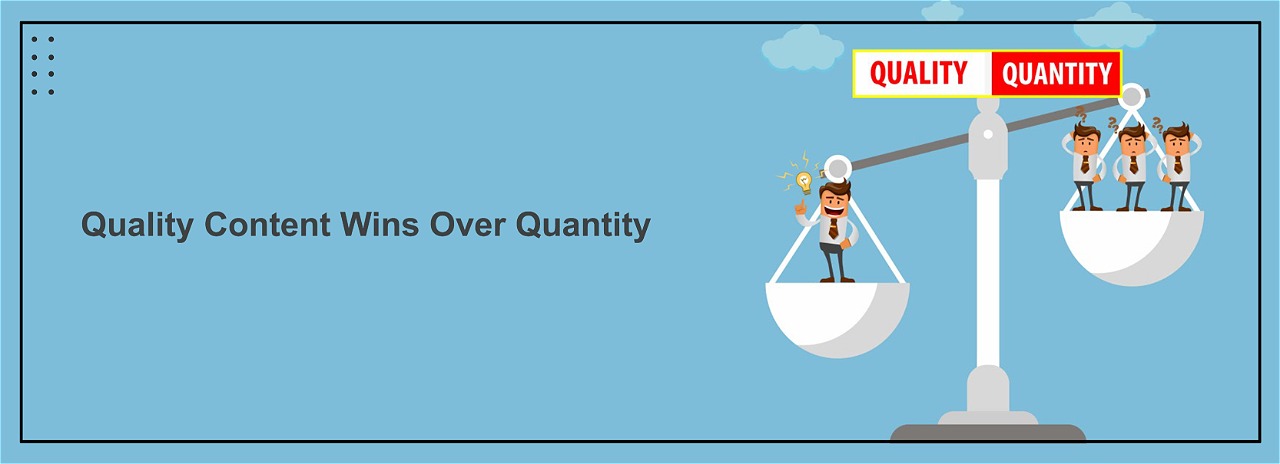
Content plays a major role in driving business growth and online visibility, but many businesses still assume that publishing more content will automatically deliver better results. While consistency is important, increasing content volume without a clear strategy often leads to low engagement and poor performance. Search engines now prioritize relevance, depth, and user intent over sheer quantity. This means content must be meaningful, well-structured, and aligned with what users are actually searching for.
A strong content strategy ensures that every piece of content has a clear purpose, such as attracting the right audience, building trust, or driving conversions. It helps businesses move beyond random publishing and adopt a focused approach aligned with long-term goals. By emphasizing quality and intent, businesses can improve performance, enhance user experience, and achieve sustainable growth over time.
Content Strategy vs Content Volume
What is Content Strategy?
Content strategy is a comprehensive plan that defines how content will be created, managed, and distributed to achieve specific business objectives. It involves understanding the target audience, identifying their needs and search intent, conducting keyword research, and creating content that addresses those needs effectively. A well-defined strategy also includes planning content formats, optimizing for search engines, and ensuring consistency in messaging and branding.
More importantly, content strategy focuses on delivering value. Instead of creating content just for the sake of publishing, it ensures that every article, blog, or post contributes to solving a problem or answering a question. This approach not only improves user engagement but also strengthens the overall effectiveness of content marketing efforts.
What is Content Volume?
Content volume refers to the amount or frequency of content published over a specific period. While regular publishing can help maintain visibility, focusing solely on quantity can be counterproductive. High-volume content production often leads to repetitive topics, shallow information, and reduced quality.
Without a proper strategy, businesses may end up creating content that does not align with user intent or business goals. This not only wastes resources but also affects SEO performance, as search engines favor meaningful and well-structured content over excessive but low-quality output.
Why Content Strategy Delivers Better Results
Aligns Content with Business Goals
A strong content strategy ensures that every piece of content is aligned with specific business objectives, such as generating leads, increasing brand awareness, or educating customers. Instead of publishing random content, businesses can focus on topics that directly contribute to their growth. This alignment makes content more purposeful and measurable, allowing businesses to track performance and optimize their efforts effectively.
Improves SEO Performance
Search engines prioritize content that is relevant, informative, and structured around user intent. A strategic approach includes proper keyword research, topic clustering, internal linking, and optimization techniques that improve search rankings. By focusing on quality and relevance, businesses can achieve better visibility and attract organic traffic. In contrast, publishing excessive content without optimization can dilute SEO efforts and reduce overall effectiveness.
Enhances User Experience
User experience is a key factor in both SEO and conversions. Strategic content is designed to be easy to read, well-structured, and informative. It addresses user queries clearly and provides valuable insights, which keeps users engaged. When users find content helpful and relevant, they are more likely to spend time on the website, explore additional pages, and trust the brand.
Builds Authority and Trust
Consistently publishing high-quality content helps businesses establish themselves as industry experts. When content provides accurate information, practical solutions, and valuable insights, it builds credibility and trust among users. Over time, this trust translates into stronger brand recognition and customer loyalty, which are essential for long-term success.
Drives Better Conversions
Content strategy plays a crucial role in guiding users through the customer journey. By addressing pain points, answering questions, and providing clear calls-to-action (CTAs), strategic content encourages users to take the next step, whether it is signing up, making a purchase, or contacting the business. Unlike high-volume content, which may attract traffic but fail to convert, strategic content focuses on achieving meaningful results.
Problems with Focusing Only on Content Volume
Low-Quality Content Production
When businesses prioritize quantity over quality, the content often lacks depth and value. This leads to poor user engagement and lower search rankings, as search engines favor well-researched and informative content.
Wasted Resources and Effort
Producing large volumes of content without a clear strategy can consume significant time and resources without delivering desired results. Businesses may struggle to maintain consistency and fail to achieve a positive return on investment.
Keyword Cannibalization
Publishing multiple pieces of content on similar topics without proper planning can lead to keyword cannibalization. This means that different pages compete with each other for the same keywords, reducing overall visibility and SEO performance.
Reduced Brand Credibility
Low-quality or repetitive content can negatively impact brand perception. Users may lose trust if the content does not provide meaningful information or fails to address their needs effectively.
How to Build an Effective Content Strategy
Understand Your Audience
The foundation of an effective content strategy lies in understanding your target audience. Businesses need to identify who their users are, what they are searching for, and the problems they are trying to solve. By analyzing user behavior, preferences, and pain points, companies can create content that directly addresses their needs. This makes the content more relevant, engaging, and useful, which ultimately improves both user experience and overall performance.
Focus on Quality Over Quantity
Instead of producing large amounts of content without a clear purpose, businesses should focus on creating high-quality and well-researched content. Quality content provides in-depth information, solves real problems, and adds value to the reader. Such content not only performs better on search engines but also builds trust and credibility with the audience, leading to better engagement and long-term results.
Use Keyword and Topic Research
Keyword and topic research play a crucial role in ensuring that content reaches the right audience. By identifying relevant keywords and organizing them into topic clusters, businesses can create content that aligns with user search intent. This approach improves search engine rankings and helps in building authority around specific subjects, making the content more effective and discoverable.
Plan Content with Clear Objectives
Every piece of content should have a defined purpose, whether it is to generate traffic, educate users, or drive conversions. Planning content with clear objectives helps businesses stay focused and measure the effectiveness of their efforts. It also ensures that content aligns with overall business goals and contributes to meaningful outcomes rather than just increasing volume.
Optimize for SEO and Conversions
Content should be optimized not only to rank higher on search engines but also to encourage user action. This includes using proper headings, formatting, internal linking, and relevant keywords for SEO. At the same time, adding clear calls-to-action (CTAs), engaging visuals, and user-friendly structure helps convert visitors into leads or customers, making the content more impactful.
The Long-Term Impact of Content Strategy
A well-planned content strategy creates lasting value for businesses by consistently attracting organic traffic over time. Instead of relying on short-term results, strategic content is designed to remain relevant and useful for users even months or years after publication. This helps in building a steady flow of visitors without the need for continuous paid advertising. As more high-quality content is published, it strengthens the website’s presence on search engines and improves overall visibility.
In addition, a strong content strategy helps in building brand authority and deeper customer engagement. When users consistently find valuable and reliable information, they begin to trust the brand and view it as an expert in the industry. This trust leads to better engagement, repeat visits, and higher chances of conversion. Unlike content created only for volume, strategic content continues to deliver results over time, making it a sustainable and cost-effective approach for long-term business growth.
Conclusion
Content strategy is more important than content volume because it focuses on creating meaningful, relevant, and purpose-driven content that aligns with business goals and user needs. Simply publishing content frequently may increase visibility for a short period, but without proper planning and value, it fails to engage users or deliver results. A well-defined strategy ensures that each piece of content serves a clear objective, whether it is improving search rankings, educating the audience, or generating leads.
By investing in a strong content strategy, businesses can achieve better SEO performance, higher user engagement, and more effective conversions. Strategic content builds trust, establishes authority, and guides users through their decision-making journey. Over time, this approach leads to consistent growth and stronger brand positioning. Therefore, focusing on quality and direction rather than quantity helps businesses create lasting impact and achieve sustainable success.
Frequently Asked Questions (FAQs)
Q1. What is content strategy?
Ans. Content strategy is a planned approach to creating, managing, and distributing content based on business goals and audience needs. It focuses on delivering valuable, relevant, and optimized content that improves engagement, builds trust, and supports long-term digital marketing success.
Q2. Why is content strategy more important than content volume?
Ans. Content strategy ensures quality, relevance, and alignment with business goals, while content volume focuses only on quantity. Strategic content drives better SEO, engagement, and conversions, whereas excessive low-quality content may harm rankings and reduce overall effectiveness.
Q3. How does content strategy improve SEO?
Ans. Content strategy improves SEO by focusing on keyword research, user intent, structured content, and internal linking. It ensures that content is relevant and valuable, helping search engines rank it higher and attract consistent organic traffic over time.
Q4. What happens if businesses focus only on content volume?
Ans. Focusing only on content volume can lead to low-quality, repetitive, and poorly optimized content. This may result in lower engagement, keyword cannibalization, reduced search rankings, and wasted resources, ultimately affecting overall digital marketing performance.
Q5. How does content strategy help in conversions?
Ans. Content strategy connects content with user intent and business goals. By addressing user needs, providing clear information, and including strong calls-to-action, it guides users through the decision-making process and increases the chances of conversions.
Q6. What are the key elements of a good content strategy?
Ans. A good content strategy includes audience research, keyword planning, content structuring, SEO optimization, and performance tracking. It ensures that content is consistent, relevant, and aligned with business objectives to deliver measurable results.
Q7. Can high-quality content outperform large volumes of content?
Ans. Yes, high-quality content often outperforms large volumes of content because it provides value, improves engagement, and ranks better on search engines. A few well-researched articles can generate more traffic and conversions than multiple low-quality posts.
Q8. How often should businesses publish content?
Ans. Businesses should focus on consistency rather than frequency. Publishing high-quality content regularly, even if less frequent, is more effective than posting large volumes of low-quality content without a clear strategy or purpose.
Q9. What is keyword cannibalization in content marketing?
Ans. Keyword cannibalization occurs when multiple pages target the same keywords, causing them to compete with each other in search rankings. This reduces visibility and weakens SEO performance, which can be avoided through proper content planning and strategy.
Q10. What is the long-term benefit of content strategy?
Ans. A strong content strategy delivers long-term benefits such as consistent organic traffic, improved brand authority, better engagement, and higher conversions. It creates sustainable growth and reduces dependency on paid marketing channels over time.