


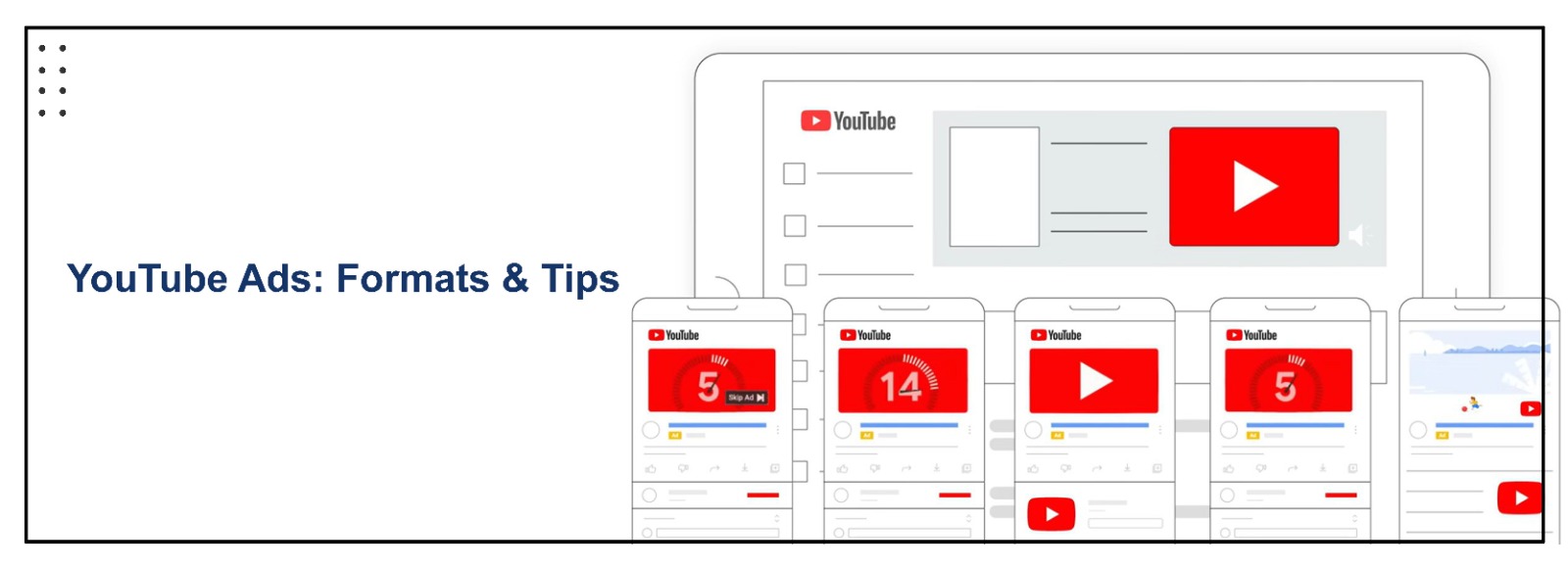
YouTube Ads have become one of the most effective digital advertising tools because they combine massive reach with precise targeting and measurable outcomes. With billions of users actively consuming video content, YouTube allows businesses to connect with potential customers at different stages of their buying journey. From introducing a brand to a new audience to persuading interested users to take action, YouTube Ads support both awareness-driven and performance-focused marketing objectives. The platform’s integration with Google’s data ecosystem further strengthens its ability to deliver relevant ads based on user intent, interests, and online behaviour.
However, achieving results on YouTube requires more than simply uploading a video and setting a budget. Advertisers must clearly understand the available ad formats, how audiences interact with video content, and which bidding and creative strategies align with their goals. A well-planned YouTube Ads strategy involves selecting the right format, targeting the right audience, crafting compelling creatives, and continuously optimizing performance. When approached strategically, YouTube Ads can deliver consistent, scalable, and measurable growth for businesses.
How YouTube Ads Work
YouTube Ads operate through the Google Ads platform, which gives advertisers full control over how and where their video ads are displayed. The process begins with uploading video creatives and selecting a campaign objective such as brand awareness, website traffic, lead generation, or conversions. Advertisers then define targeting parameters, including audience demographics, interests, intent signals, and placements, and choose a suitable bidding strategy based on their goals. Once the campaign is live, ads are shown before, during, or after YouTube videos, as well as across Google’s video partner network, ensuring both reach and relevance.
One of the biggest strengths of YouTube advertising is its intent-based targeting capability. Because YouTube is integrated with Google’s search and browsing data, advertisers can reach users based on recent search behaviour, online activity, viewing habits, and remarketing lists. This allows brands to connect with users who are actively researching, comparing options, or preparing to make a purchase, making YouTube Ads highly effective for influencing decisions at the right moment.
Detailed Overview of YouTube Ad Formats
YouTube offers multiple ad formats designed to meet different advertising objectives, audience behaviours, and campaign goals. Understanding how each format works helps advertisers choose the right approach for visibility, engagement, or conversions.
Skippable In-Stream Ads
The most commonly used YouTube ads and appear before, during, or after videos. Viewers can skip these ads after five seconds, and advertisers are charged only when a user watches at least 30 seconds or interacts with the ad. This format is ideal for combining brand storytelling with performance marketing. Since viewers can skip, the opening seconds must capture attention immediately. Skippable ads are widely used for brand awareness, lead generation, website visits, and conversions.
Non-Skippable In-Stream Ads
Short ads, usually between 6 and 15 seconds, that viewers must watch before accessing content. These ads guarantee visibility and are best suited for brand campaigns, product launches, and important announcements where message recall is critical. Because viewers cannot skip, creatives must be concise, clear, and engaging to avoid negative brand perception.
In-Feed Video Ads (Discovery Ads)
It Appear in YouTube search results, on the homepage, and next to related videos. These ads look like organic content and play only when users choose to click on them. They work exceptionally well for educational content, tutorials, product demonstrations, reviews, and long-form videos. Since viewers opt in, engagement and watch time are usually higher, making this format ideal for content marketing and thought leadership strategies.
Bumper Ads
Bumper Ads are six-second, non-skippable ads designed for quick brand recall. They are not intended for detailed storytelling but for reinforcing brand presence through frequency. Bumper ads are most effective when used alongside other formats to support awareness campaigns or retarget audiences who have already engaged with longer ads.
Masthead Ads
It Appear at the top of the YouTube homepage and deliver massive reach in a short time. These ads are generally used for major launches, events, or nationwide campaigns. Due to their premium placement and cost, masthead ads are typically used by large brands and require strong creative execution to justify the investment.
YouTube Shorts Ads
It allow advertisers to place vertical videos within the Shorts feed, targeting mobile-first and younger audiences. These ads are highly effective for short messages, app promotions, impulse-driven offers, and visually engaging content. Brands targeting Gen Z or mobile-centric users often achieve strong engagement through Shorts Ads.
Together, these formats give advertisers flexibility to design campaigns that align with different stages of the customer journey, from awareness to conversion.
Building an Effective YouTube Ads Strategy
Running successful YouTube Ads is not about uploading a video and setting a budget it requires a well-defined strategy that aligns business objectives, audience intent, creative execution, and continuous optimization. A structured approach ensures that advertising spend generates measurable value rather than just views.
Defining Clear Campaign Objectives
Every YouTube Ads campaign must begin with a clearly defined objective. Businesses may aim to increase brand awareness, expand reach, drive website traffic, generate leads, promote app installs, or achieve direct sales conversions. Each objective serves a different purpose in the customer journey and determines how success will be measured.
The chosen objective directly influences the selection of ad formats, bidding strategies, audience targeting, and key performance indicators. For example, awareness campaigns prioritize reach and impressions, while conversion campaigns focus on cost per acquisition and return on ad spend. Without a clear objective, campaigns often lack direction, leading to inefficient spending and unclear results.
Audience Targeting and Segmentation
Audience targeting is one of YouTube’s strongest advantages. The platform allows advertisers to reach users based on demographics, interests, life events, viewing behaviour, custom intent signals, placements, and remarketing data. Advertisers can also target users based on recent Google search activity, enabling highly intent-driven campaigns.
Effective segmentation ensures that ads are shown only to users who are most likely to engage or convert. Instead of targeting broad audiences, successful advertisers create multiple audience segments and tailor messaging for each group. This approach reduces wasted impressions, improves relevance, and significantly enhances return on investment.
Creative Strategy and Messaging
Creative quality is the most critical factor in YouTube Ads performance. Since viewers can skip ads quickly, the first five seconds must capture attention and communicate value immediately. Successful creatives clearly identify a problem, present a solution, and explain why the brand is relevant all within seconds.
Authentic storytelling, real customer scenarios, and direct messaging consistently outperform generic or overly polished videos. Ads should include early branding, captions for sound-off viewing, and a strong call to action. Instead of focusing solely on visuals, effective YouTube Ads focus on clarity, relevance, and emotional connection.
Budgeting and Bidding Strategy
YouTube Ads offer multiple bidding options, including cost-per-view (CPV), cost-per-thousand impressions (CPM), and cost-per-action (CPA). The right bidding model depends on campaign goals and audience intent.
For brand awareness campaigns, CPV or CPM bidding helps maximize visibility at controlled costs. For performance-driven campaigns, CPA-based bidding combined with accurate conversion tracking delivers more consistent results over time. Budget allocation should be gradual, allowing advertisers to test, learn, and scale based on performance rather than committing large budgets upfront.
Landing Page and Funnel Optimization
A YouTube ad’s effectiveness does not end with the video it depends heavily on the user experience that follows. Landing pages must load quickly, reflect the ad message, and guide users toward a clear and simple action. Any mismatch between the ad promise and landing page content can result in high drop-off rates.
Successful campaigns focus on building a smooth conversion funnel, whether it leads to a signup form, app download, or purchase page. Clear messaging, minimal distractions, and mobile optimization are essential for converting YouTube traffic into meaningful outcomes.
Measuring Performance and Optimizing Campaigns
YouTube Ads provide detailed analytics, including view rate, watch time, audience retention, click-through rate, conversions, and cost efficiency. These metrics help advertisers understand how users interact with ads and where improvements are needed.
Optimization is an ongoing process. Successful advertisers continuously test different creatives, audiences, placements, and bidding strategies. Underperforming elements are refined or replaced, while successful components are scaled. Long-term profitability on YouTube depends on data-driven decision-making and consistent optimization.
An effective YouTube Ads strategy balances creativity with data, reach with relevance, and visibility with conversions. By clearly defining objectives, targeting the right audience, crafting compelling creatives, managing budgets wisely, and optimizing continuously, businesses can turn YouTube Ads into a powerful and sustainable growth channel.
Common Mistakes to Avoid
One of the most common reasons YouTube ad campaigns fail is generic or broad targeting. When advertisers try to reach everyone instead of a clearly defined audience, ads are shown to users with little or no interest, leading to low engagement and wasted budget. Precise targeting based on intent, interests, and behaviour is essential for relevance and performance.
Another frequent mistake is using weak or generic creatives. YouTube is a visual platform, and ads that fail to capture attention within the first five seconds are quickly skipped. Overly promotional videos, unclear messaging, or lack of a strong call to action significantly reduce effectiveness.
Many advertisers also set unrealistic expectations, expecting instant sales without proper testing or optimization. Ignoring mobile optimization, running campaigns without conversion tracking, and relying on a single ad variation further limit result. Continuous testing, data analysis, and creative refinement are necessary to improve performance and achieve sustainable outcomes.
Conclusion
YouTube Ads have emerged as a highly effective digital marketing tool because they combine massive reach with precise targeting and measurable results. When businesses clearly understand the available ad formats and choose them according to specific goals such as brand awareness, lead generation, or sales they are able to communicate more effectively with their target audience. A well-planned YouTube campaign ensures that the right message reaches the right viewers at the right stage of their decision-making journey.
Successful YouTube advertising also depends on continuous optimization and data-driven decision-making. Regular analysis of performance metrics helps refine creatives, improve targeting, and control costs. When creativity is supported by accurate audience insights and consistent optimization, YouTube Ads can evolve into a powerful, scalable growth channel that supports long-term business success.
Frequently Asked Questions (FAQs)
Q1. What are YouTube Ads?
Ans. YouTube Ads are paid video advertisements shown on YouTube through the Google Ads platform. These ads help businesses reach targeted audiences using video content. Advertisers can promote brand awareness, drive website traffic, generate leads, or increase sales by targeting users based on demographics, interests, search behaviour, and viewing history.
Q2. Are YouTube Ads suitable for small businesses?
Ans. Yes, YouTube Ads are highly suitable for small businesses because budgets are flexible and targeting is precise. Advertisers can start with small daily budgets and pay only when users engage with the ad. This allows small businesses to compete effectively while controlling costs and measuring performance accurately.
Q3. Which YouTube ad format is best for beginners?
Ans. Skippable in-stream ads are best for beginners because they are cost-efficient and flexible. Advertisers are charged only when viewers watch at least 30 seconds or interact with the ad. This format allows testing of creatives, audiences, and messaging without committing large budgets upfront.
Q4. How much does YouTube advertising cost?
Ans. YouTube advertising costs vary based on targeting, competition, and ad quality. Most campaigns run on a cost-per-view or cost-per-impression model. Advertisers can set daily budgets and bid limits, making costs predictable. Effective targeting and optimization help reduce costs while improving results.
Q5. Can YouTube Ads generate leads and sales?
Ans. Yes, YouTube Ads can effectively generate leads and sales when combined with strong targeting, compelling video creatives, and optimized landing pages. Performance-driven campaigns use conversion tracking and smart bidding strategies to reach users who are more likely to take action, such as signing up or making a purchase.
Q6. How long should a YouTube ad video be?
Ans. The ideal length depends on the ad format and objective. Skippable ads typically perform well between 15 and 30 seconds, while bumper ads are limited to 6 seconds. The most important message should appear within the first 5 seconds to capture attention before users skip.
Q7. What targeting options are available on YouTube Ads?
Ans. YouTube Ads offer advanced targeting options, including age, gender, location, interests, life events, custom intent audiences, and remarketing. Advertisers can also target users based on recent Google searches or specific YouTube channels, enabling highly relevant and intent-driven ad delivery.
Q8. Do users need to watch the full ad for advertisers to pay?
Ans. No, advertisers do not always pay for full views. For skippable ads, payment occurs only if the viewer watches at least 30 seconds or interacts with the ad. Non-skippable ads are charged per impression, ensuring guaranteed visibility regardless of engagement.
Q9. How can YouTube Ads performance be measured?
Ans. YouTube Ads performance is measured using metrics such as views, view rate, watch time, click-through rate, conversions, and cost per result. These insights help advertisers understand audience behaviour, evaluate campaign effectiveness, and optimize targeting, creatives, and bidding strategies over time.
Q10. What are common mistakes to avoid in YouTube Ads?
Ans. Common mistakes include unclear campaign objectives, weak creatives, broad targeting, ignoring mobile optimization, and poor landing pages. Many advertisers also fail to test multiple ad variations or monitor performance regularly. Continuous testing, data analysis, and optimization are essential for long-term success.