

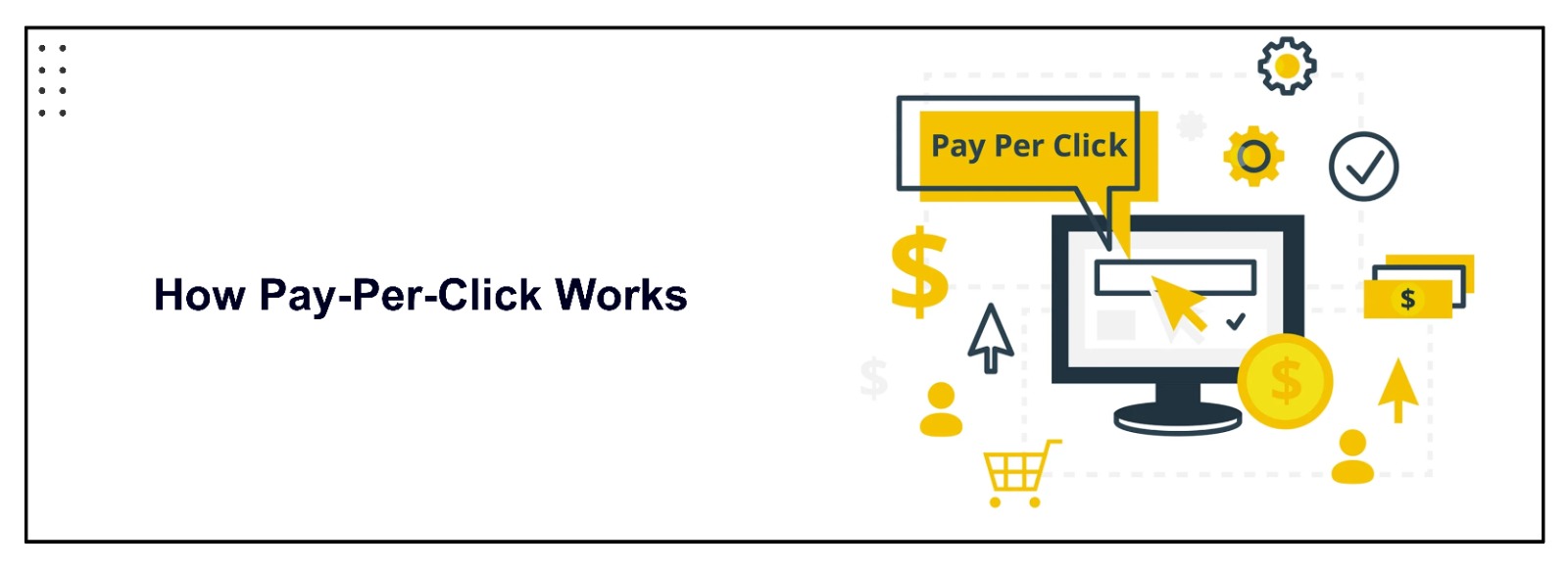
Pay-Per-Click (PPC) advertising is a popular digital marketing strategy in which advertisers pay a fee every time a user clicks on their online advertisement. It helps businesses attract visitors to their websites quickly without waiting for organic search results through search engine optimization (SEO). PPC ads commonly appear on search engines, social media platforms, websites, and mobile applications, allowing businesses to promote their products or services to a targeted audience.
This advertising model is considered performance-based because advertisers pay only when users actually click on their ads. PPC helps businesses increase online visibility, drive website traffic, generate leads, and boost sales. From small startups to large companies, many organizations use PPC campaigns to reach potential customers, control advertising budgets, and compete effectively in the fast-growing digital marketplace.
Meaning of Pay-Per-Click Advertising
Pay-Per-Click (PPC) advertising is a digital marketing model in which advertisers pay a specific fee every time a user clicks on their online advertisement. The main objective of PPC advertising is to drive targeted traffic to a website or landing page where visitors can learn more about a business, explore products or services, or complete actions such as making a purchase, filling out a contact form, or subscribing to updates.
Unlike traditional advertising methods such as television, radio, or print media, where businesses pay for displaying advertisements regardless of customer response, PPC advertising focuses on measurable engagement. Advertisers are charged only when users interact with the advertisement by clicking on it. For instance, if the cost per click is ₹20 and the advertisement receives 500 clicks, the total cost of the campaign will be ₹10,000, making PPC a cost-controlled and performance-based advertising strategy.
History and Growth of PPC Advertising
The concept of Pay-Per-Click advertising began in the late 1990s when search engines started experimenting with sponsored listings. Early digital advertising platforms allowed advertisers to bid on keywords so that their advertisements could appear when users searched for related terms. Over time, PPC advertising evolved significantly with the introduction of advanced advertising platforms such as Google Ads, Microsoft Advertising, and social media advertising networks.
These platforms introduced sophisticated targeting tools, analytics dashboards, and automated bidding strategies that made PPC campaigns more efficient and data driven. Today, PPC advertising has become a major component of digital marketing strategies worldwide. Businesses across industries rely on PPC campaigns to compete in search results, promote products, and generate immediate visibility online.
How Pay-Per-Click Advertising Works
The working mechanism of Pay-Per-Click advertising involves several steps that allow advertisers to reach potential customers based on search intent, demographics, and online behavior.
Keyword Research and Selection
The first step in creating a PPC campaign is identifying the right keywords. Keywords are the words or phrases that users type into search engines when looking for information, products, or services.
Advertisers conduct detailed keyword research to identify the search terms most relevant to their business. These keywords form the foundation of the PPC campaign because advertisements are displayed when users search for these terms.
For example, a digital marketing company may target keywords such as:
- SEO services
- PPC advertising agency
- digital marketing solutions
- online advertising services
Choosing the right keywords is because it determines the audience that will see the advertisement.
Creating Advertisements
Once the keywords are selected, advertisers create advertisements that will appear on digital platforms. A typical PPC advertisement includes:
- A headline that captures attention
- A description that explains the product or service
- A display URL that shows the website address
- A call-to-action encouraging users to click
The goal of the advertisement is to persuade users to click on it and visit the advertiser’s website.
Effective advertisements are clear, concise, and relevant to the user's search query.
The Bidding System
PPC advertising platforms operate through an auction-based bidding system. Advertisers place bids indicating the maximum amount they are willing to pay for a click on their advertisement.
Whenever a user enters a search query, the advertising platform conducts an automated auction among advertisers who have targeted that particular keyword. The system determines which advertisements will appear and their position on the page.
However, the advertisement with the highest bid does not always win. Search engines also consider the quality and relevance of the advertisement when deciding which ads to display.
Quality Score and Ad Rank
Search engines evaluate the quality of PPC advertisements using a metric known as the Quality Score. This score is based on factors such as:
- Relevance of the advertisement to the keyword
- Expected click-through rate (CTR)
- Quality of the landing page
- User experience
A higher quality score can lead to lower advertising costs and better ad placement.
Ad Rank, which determines the position of an advertisement, is calculated based on both the bid amount and the quality score.
Ad Display and Click
After the auction process, the selected advertisements appear on search engine results pages or other advertising platforms. These advertisements are usually labeled as "Sponsored" or "Ad".
When users find the advertisement relevant and click on it, they are redirected to the advertiser’s website or landing page. At this moment, the advertiser is charged for the click.
Landing Page and Conversion
The landing page plays a crucial role in the success of a PPC campaign. After clicking the advertisement, users arrive on a webpage designed to encourage them to complete a specific action.
Common conversion actions include:
- Purchasing a product
- Submitting an inquiry form
- Signing up for a newsletter
- Downloading a brochure
- Requesting a service consultation
A well-designed landing page improves the chances of converting visitors into customers.
Types of Pay-Per-Click Advertising
PPC advertising can take several forms depending on the platform and marketing objective.
Search Advertising
Search advertising is the most common type of PPC campaign. These advertisements appear on search engine results pages when users search for specific keywords. Search ads target users who already have an intent to find information or purchase products, making them highly effective.
Display Advertising
Display advertising involves placing visual advertisements such as banners or images on websites within an advertising network. These advertisements help increase brand awareness and attract potential customers while they browse online content.
Social Media Advertising
Social media platforms offer PPC advertising options that allow businesses to target users based on demographics, interests, behavior, and location. These advertisements appear in user feeds, stories, and video content across social media platforms.
Shopping Ads
Shopping advertisements are commonly used by e-commerce businesses to display product images, prices, and store information directly in search results. These advertisements help users compare products and make purchasing decisions quickly.
Remarketing Campaigns
Remarketing campaigns target users who have previously visited a website but did not complete a purchase or other desired action. These advertisements remind users about the product or service and encourage them to return to the website. Remarketing is highly effective because it focuses on users who have already shown interest in the business.
Advantages of Pay-Per-Click Advertising
PPC advertising offers numerous benefits that make it a valuable marketing strategy for businesses.
Immediate Results
Unlike SEO, which may take months to produce results, PPC advertisements can appear almost immediately after the campaign is launched.
Targeted Advertising
PPC campaigns allow businesses to target audiences based on specific characteristics such as:
- Geographic location
- Age group
- Interests
- Device type
- Online behavior
This level of targeting ensures that advertisements reach the most relevant audience.
Measurable Performance
Digital advertising platforms provide detailed analytics that allow advertisers to measure campaign performance accurately. Businesses can track metrics such as:
- Number of clicks
- Click-through rate
- Conversion rate
- Cost per acquisition
These insights help businesses optimize their campaigns and improve results.
Budget Control
Advertisers can set daily or monthly budgets and adjust spending according to their marketing goals. This flexibility makes PPC suitable for businesses of all sizes.
Increased Brand Visibility
Even if users do not click on advertisements, seeing the brand repeatedly in search results helps build brand awareness.
Challenges of PPC Advertising
Although PPC advertising offers many advantages, it also presents certain challenges.
High competition for popular keywords can increase advertising costs. Businesses must carefully manage their bids and optimize campaigns to maintain profitability.
PPC campaigns also require continuous monitoring and optimization. Advertisers must regularly analyze performance data, update keywords, and refine ad copy to improve results. Another potential challenge is click fraud, where automated bots or competitors repeatedly click on advertisements to increase advertising costs.
Best Practices for Successful PPC Campaigns
Businesses can improve the effectiveness of PPC campaigns by following certain best practices. Conduct thorough keyword research to identify the most relevant search terms. Create compelling and engaging advertisements with clear calls to action.
Ensure that landing pages provide a seamless and informative user experience.
Monitor campaign performance regularly and adjust strategies when necessary.
Test multiple advertisement variations to determine which performs best.
Use negative keywords to prevent advertisements from appearing in irrelevant searches. Implementing these strategies helps businesses maximize the return on their advertising investment.
The Future of PPC Advertising
The future of Pay-Per-Click advertising is closely linked with advancements in artificial intelligence, machine learning, and data analytics. Advertising platforms are increasingly using automation to optimize bidding strategies, improve targeting accuracy, and personalize advertisements for individual users.
Voice search, mobile browsing, and video advertising are also transforming the PPC landscape. As consumer behavior continues to evolve, businesses must adapt their PPC strategies to remain competitive in the digital marketplace.
Conclusion
Pay-Per-Click Advertising has become one of the most powerful and efficient tools in digital marketing. By allowing businesses to pay only when users click on their advertisements, PPC provides a cost-effective way to attract targeted traffic and generate measurable results. When managed effectively, PPC campaigns can help businesses increase brand visibility, drive website traffic, generate leads, and boost sales.
However, successful PPC advertising requires careful planning, strategic keyword selection, compelling advertisements, and continuous optimization. As the digital marketing landscape continues to evolve, Pay-Per-Click Advertising will remain an essential strategy for businesses seeking to expand their online presence and reach the right audience at the right time.
Frequently Asked Questions (FAQs)
Q1. What is Pay-Per-Click (PPC) advertising?
Ans. Pay-Per-Click (PPC) advertising is a digital marketing model in which advertisers pay a fee every time someone clicks on their online advertisement. Instead of gaining website traffic organically, businesses can buy visits through PPC ads that appear on search engines, websites, and social media platforms.
Q2. How does Pay-Per-Click advertising work?
Ans. PPC advertising works through a bidding system. Advertisers choose keywords related to their business and create ads targeting those keywords. When users search for those terms, the advertising platform runs an auction and displays the most relevant ads. The advertiser pays only when a user clicks on the ad.
Q3. What are the main platforms used for PPC advertising?
Ans. Some of the most popular platforms for Pay-Per-Click advertising include:
- Google Ads
- Microsoft Advertising (Bing Ads)
- Facebook Ads
- Instagram Ads
- LinkedIn Ads
- YouTube Ads
These platforms allow businesses to display advertisements to targeted audiences.
Q4. What is the difference between PPC and SEO?
Ans. PPC and SEO are both digital marketing strategies but they work differently. PPC involves paid advertisements where businesses pay for each click, while SEO focuses on improving a website’s organic ranking in search engine results without paying for clicks.
Q5. What is a keyword in PPC advertising?
Ans. A keyword in PPC advertising is a word or phrase that advertisers choose to trigger their ads when users search for that term online. Selecting the right keywords helps businesses reach potential customers who are actively searching for their products or services.
Q6. What is cost-per-click (CPC)?
Ans. Cost-Per-Click (CPC) refers to the amount an advertiser pays each time a user clicks on their advertisement. The CPC varies depending on keyword competition, industry demand, and the quality of the advertisement.
Q7. What is a PPC landing page?
Ans. A PPC landing page is the webpage users are directed to after clicking an advertisement. It is designed to encourage visitors to take a specific action, such as purchasing a product, signing up for a service, or submitting contact information.
Q8. What are the benefits of Pay-Per-Click advertising?
Ans. Pay-Per-Click advertising offers several benefits including:
- Immediate visibility on search engines
- Targeted audience reach
- Measurable campaign performance
- Flexible advertising budgets
- Increased website traffic and leads
Q9. Is PPC advertising suitable for small businesses?
Ans. Yes, PPC advertising is suitable for small businesses because it allows them to control their budget and target specific audiences. Even with a small budget, businesses can run effective PPC campaigns and generate leads.
Q10. How can businesses improve their PPC campaigns?
Ans. Businesses can improve their PPC campaigns by conducting proper keyword research, creating compelling advertisements, optimizing landing pages, using negative keywords, and regularly analyzing campaign performance.